
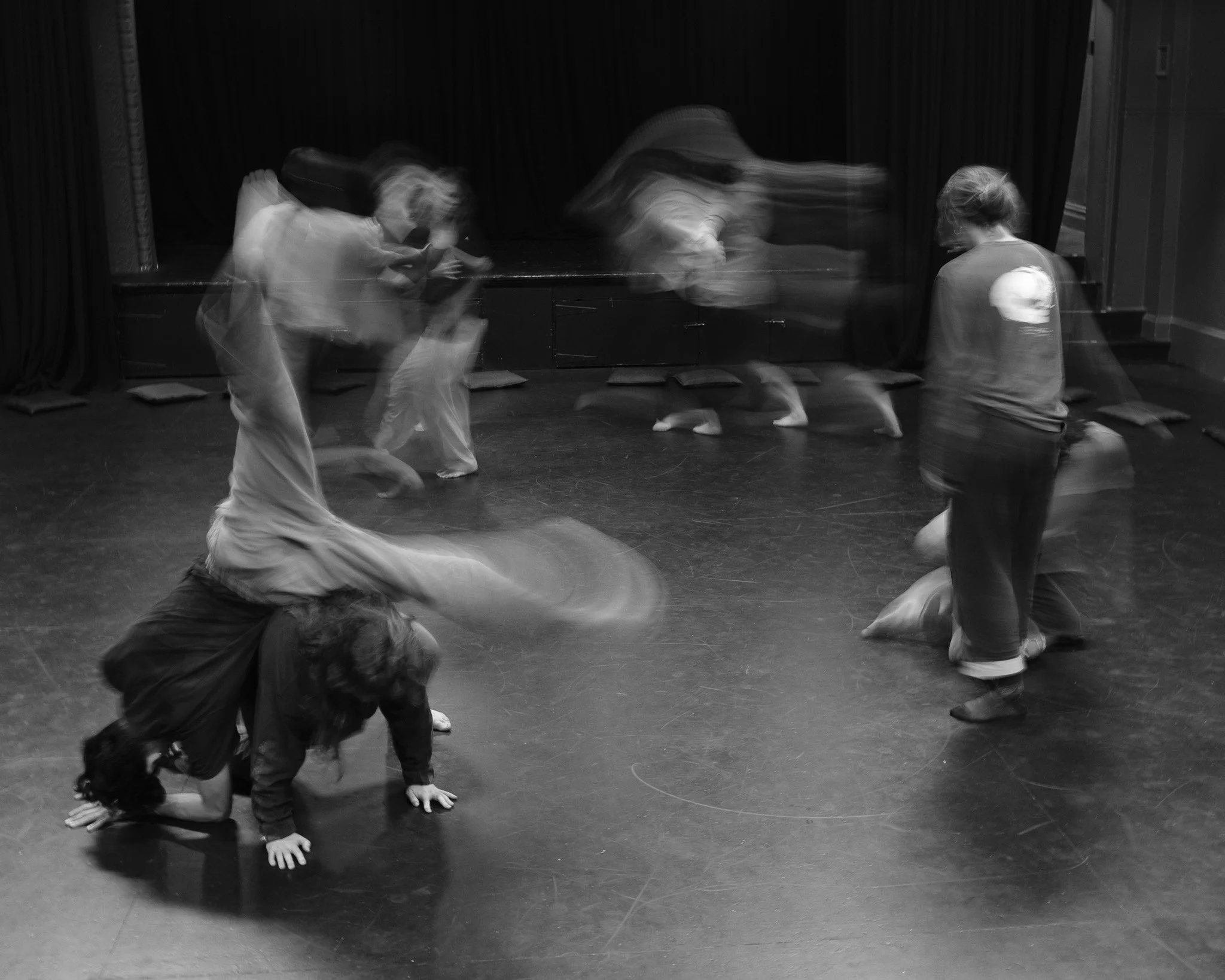
WHAT IS CONTACT IMPROVISATION (CI) ?
A social dance form created by contemporary dancer, Steve Paxton, in 1972.
He wanted to see what would happen to the way two or more bodies moved together when sharing weight through physical contact.
Turns out alot happens, and the exploration and insights are endless.
I love CI for its cultivation of physical communication, being with what is happening in the moment and its endless physical puzzles that are so joyous.
WHO IS CI FOR?
Any one who is interested in CI. It does not require any prior dance or movement experience. All levels of experience work together in class.
COMMUNITY CLASSES
These classes are run through Contact Improvisation Melbourne.
They run every Saturday 1.30-3.30 at Dance of Life Yoga Studio
St Marks Church, 250 George Street, Fitzroy VIC 3065.
Booking link: https://www.trybooking.com/CGJQI
Different teaches teach every week. To know when I am teaching you can contact me through the enquiry page.
Meanwhile you can join the Facebook Page Contact Improvisation Melbourne to get updates about CI events in Victoria.
or head to the website for all https://cimelbourne.org/
WHERE DO I OFFER CI?
UPCOMING WORKSHOPS
CI TRAINING DAY
This training day will explore the unpredictable nature of CI, and the underlying skills that help us stay responsive, organised and available to whatever emerges.
Sunday 20th September
10am–5.15pm (with lunch break)
At the new Dancehouse Studios
4/219 Albion St, Brunswick
$100
12 spots available
PAST EVENTS
OSMOSIS #8 BODY-MIND TONE
Jan 17th and 18th
Check out OSMOSIS at their Facebook Page
VCE DANCE STUDENTS
This workshop introduces Contact Improvisation as a way for students to deepen their relationship to movement, gravity, and choice.
Through guided solo and partnered explorations, they will work with posture, alignment, and weight, noticing how the body organises itself in stillness and in motion.
The focus is not on correcting shape, but on sensing support and efficiency from the inside, allowing movement to become clearer and more grounded.
Students explore how force, flow, and energy are generated and released, expanding their dynamic range without pushing or over-performing.
Attention is given to listening, adaptability, and timing, supporting students to move with greater presence and responsiveness within performance contexts.
Nicole brings a rigorous understanding of CI as well as years of experience training bodies. This combination ensures people leave her class empowered to safely continue their own explorations of the form.
— Colin Sneesby, Lecturer in Movement (Theatre), University of Melbourne.
Through her classes, Nicole gives this elusive dance form clarity and inspiration. Her deep understanding of movement from a mechanical perspective and her somatic curiosity offers the students concrete tools to explore and develop in the form of CI.
— Doreen, student
Nicole has a rare gift for turning complex skills and subtle concepts into clear, simple tasks that become “aha!” moments for your body.
— Martin Hughes , CI Teacher & Mentor
"I always look forward to Nicole's classes—she brings energy, enthusiasm, and a curiosity that makes them fun and informative. I'm always impressed by how she guides a class that's inclusive of both beginners and experienced dancers. I love how she adapts to participants, gives clear instructions, welcomes feedback and reflection, and always leaves time for dancing to integrate the technical."
— Dom, student
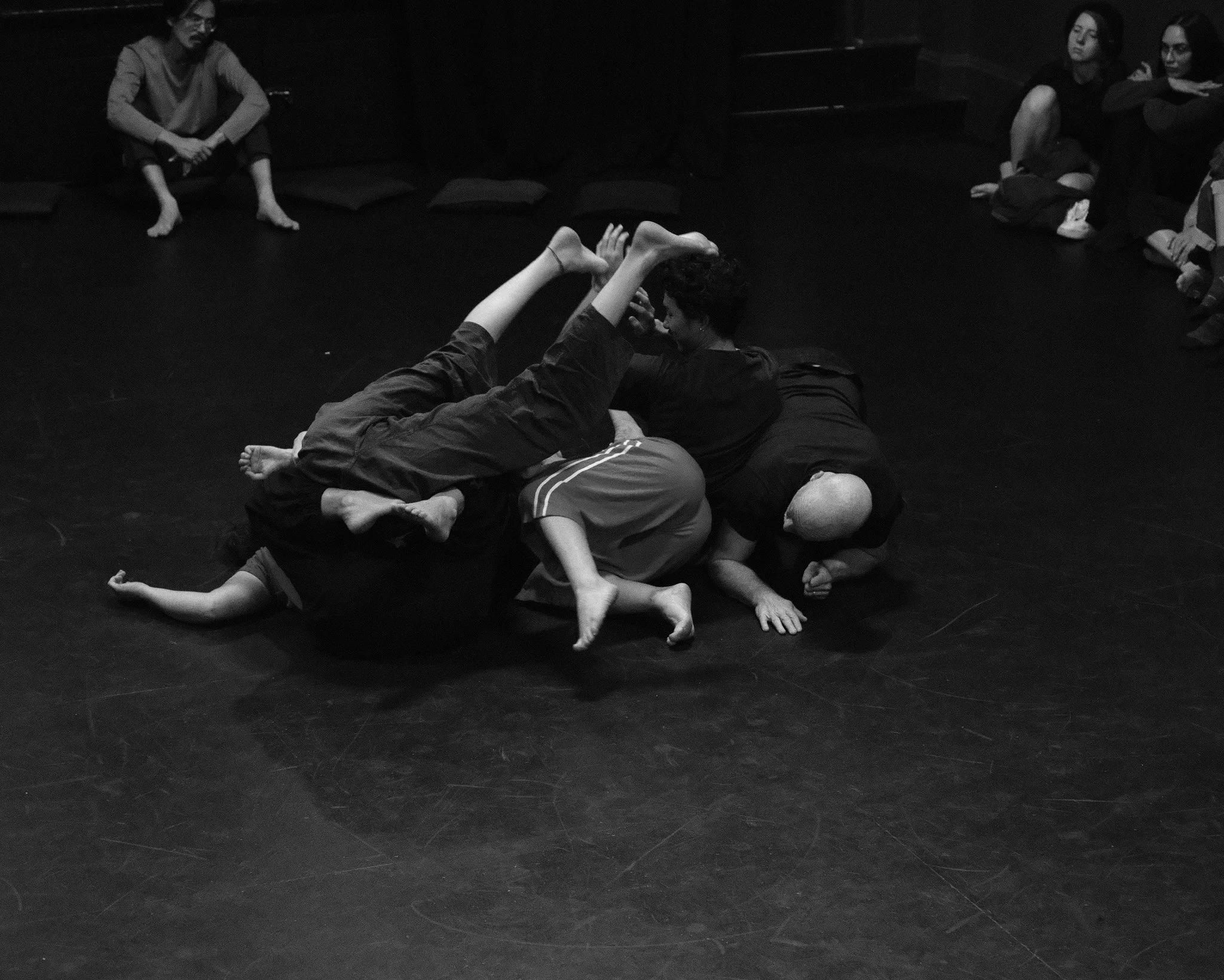
What CI looks like in practice
Below is Sasha Dodo and Dolores Dewhurst Marks. They run ‘Towards’ a Contact Improvisation travelling school in Thailand. I had the pleasure of learning from them and their team in a week long training in 2022. They are advance CI dancers, and like anyone who dances CI they have their own style. Here, they are dancing in the context of a ‘Jam’. Traditionally Jams are silent but it is also common practice to have music Jams.
Originally from Germany Joerg Hassmann is now based in Australia. He is a patience and generous teacher.
“My profession and passion is to dance and to share the dance with others. That’s what I do through teaching, performing, writing and organizing. In the beginning I was mainly driven by creating dance and theatre pieces, bringing improvisation on stage. A while back teaching CI has become my main field of exploration, which I began in 1995 – and now it lets me travel the whole world. Developmental movement patterns, an anatomical focus on the skeleton and the fascia system, Capoeira, Release Techniques and many kinds of sports have guided my understanding of the moving body.